Centre for Urbanism & Socio-Spatial Practices [CUSP]
Urbanism is lived, negotiated, and remade through everyday spatial practice.
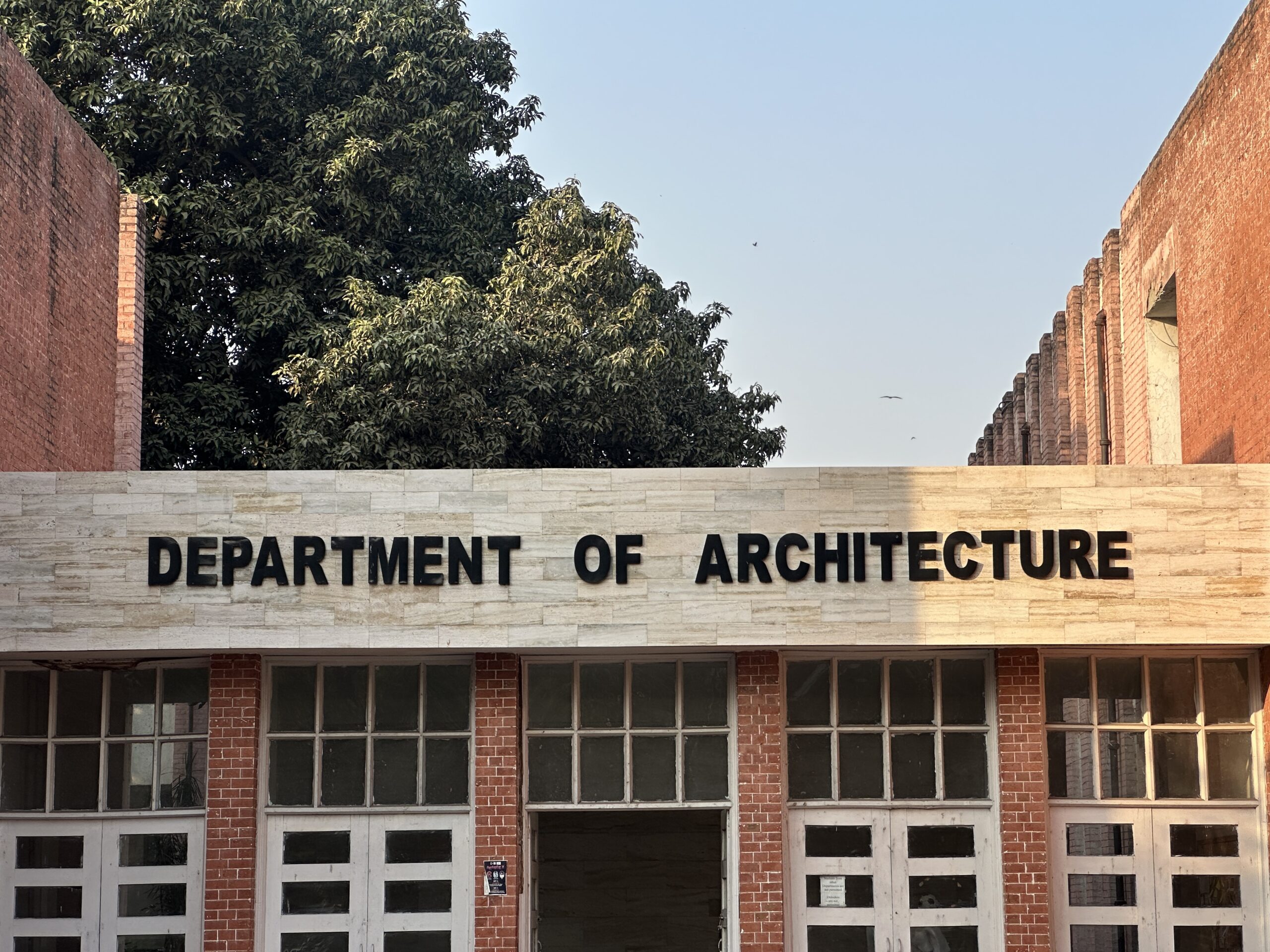
A design-led research centre at the Department of Architecture, University of Engineering & Technology, Lahore — investigating the spatial, social, and cultural dimensions of urban life.
About CUSP
CUSP — the Centre for Urbanism & Socio-Spatial Practices is a design-led research centre situated at the intersection of architectural, urban, and interior design. Founded at the Department of Architecture, UET Lahore, the centre investigates urbanism not as a fixed discipline or bounded object, but as a relational and living field: one continuously shaped by cultural encounters, material processes, and the everyday practices through which people inhabit, contest, and transform their environments.
At the heart of CUSP’s work is the conviction that urbanism is something lived before it is planned — that the city is produced not only through master plans and building codes, but through use, movement, memory, encounter, and the quiet negotiations of everyday spatial life. This positions CUSP at a productive intersection: between the discipline of architecture and the social sciences; between design practice and critical theory; between the local conditions of Lahore and the global debates of contemporary urbanism.
Drawing on critical spatial theory, design-led research, and socio-spatial inquiry, CUSP develops conceptual and methodological frameworks that address spatial justice, inclusion, and integration. The centre’s theoretical work is anchored in Threshold Urbanism — a framework developed through sustained doctoral and postdoctoral research — which understands thresholds as active sites of encounter, mediation, and possibility.
CUSP brings an international research lineage to its work in and on the city of Lahore and beyond.
Vision · A research community that advances rigorous, socially engaged, and methodologically innovative knowledge about the city as a site of everyday life, difference, and transformation.
Mission · To produce design-led socio-spatial research that is theoretically ambitious, methodologically distinctive, and ethically grounded — contributing to academic debates on urbanism, spatial justice, and sustainable futures while remaining responsive to the lived conditions of the cities we study.
Research Themes
01 · Thresholds & Spatial Interfaces
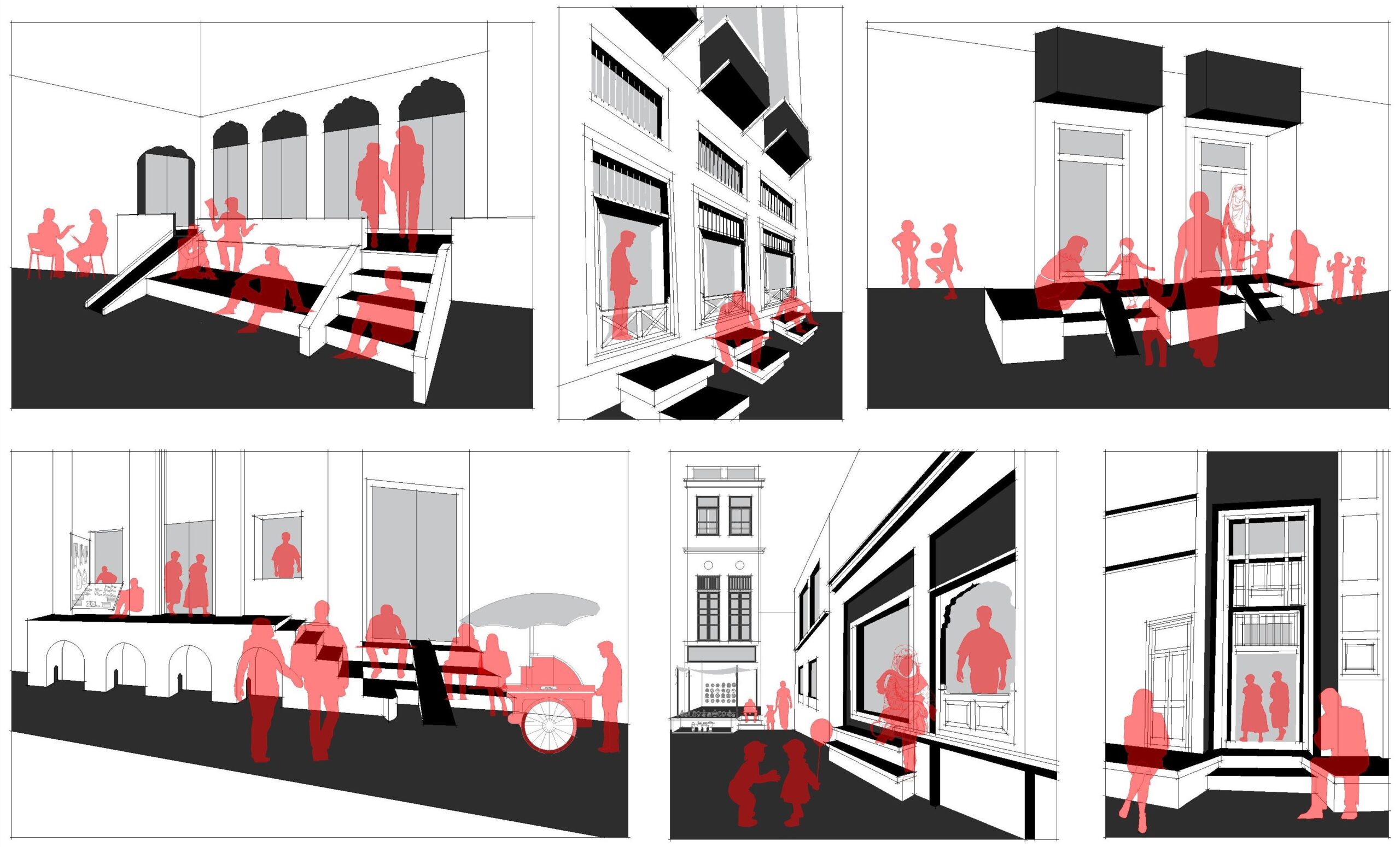
The threshold — the edge, the in-between, the liminal zone — is both the object and the lens of CUSP’s research. Threshold Urbanism examines how boundaries operate not as fixed divisions but as generative spatial conditions: sites where encounters happen, identities are negotiated, and urban life is continuously remade. Research under this theme investigates thresholds at multiple scales, from the domestic doorstep to the intercultural urban node.
02 · Intercultural Urban Practices
Cities are sites of cultural difference — and the spatial forms through which this difference is negotiated, expressed, and transformed are a central concern of CUSP. This theme investigates how intercultural encounters are produced through everyday spatial practice, with particular attention to South–North comparative contexts and the conditions under which reciprocal exchange becomes possible.
03 · Feminist Urbanism & Spatial Justice
CUSP approaches the city through feminist and decolonial lenses that centre care, equity, and the experiences of those historically marginalised by urban planning and design. This theme examines how spatial justice is produced — and denied — through the built environment, and develops frameworks for reimagining urban space as a commons of shared inhabitation.
04 · Intergenerational Urban Futures
As cities age and diversify, the question of how urban environments can support meaningful engagement across generations becomes urgent. This theme investigates the spatial conditions of intergenerational encounter — the shared bench, the mixed-use street, the community threshold — asking how design can foster collective belonging and social cohesion.
05 · Participatory & Design-Led Methods
CUSP is committed to developing methodological frameworks that are as rigorous and innovative as the questions they address. Research-by-drawing, spatial ethnography, threshold mapping, and co-design are among the methods the centre develops and deploys — treating design not as a form of illustration but as a mode of inquiry.
Members
Founding Director
Dr. Sarah Javed Shah
Assistant Professor, Department of Architecture, UET Lahore · PhD, Politecnico di Milano · MSCA-PF Seal of Excellence
Core Research Team
—- TBC, Department of Architecture, UET Lahore, Pakistan
—- TBC , Welsh School of Architecture, Cardiff University, UK
—- TBC, Department of Architecture & Urban Studies, Politecnico di Milano, Italy
—- TBC, Faculty of Architecture & Built Environment, TU Delft, Netherlands
—- TBC, Faculty of Architecture, RWTH Aachen, Germany
International Advisory Board
—- TBC
—- TBC
—- TBC
—- TBC
—- TBC
—- TBC
—- TBC
—- TBC
Active Projects
TU[for]III · Threshold Urbanism for Intercultural and Intergenerational Integration
The centre’s flagship theoretical project, TU[for]III investigates how threshold spaces can facilitate meaningful interaction between cultures and generations in rapidly transforming urban environments. The project develops a comprehensive theoretical superstructure for Threshold Urbanism — integrating intercultural and intergenerational dimensions into a unified socio-spatial framework. Research sites span South Asia and Europe, with a particular focus on shared spatial environments and their temporality.
THRESH-SUF · Feminist Re-Imagination of Intercultural Nodes for Sustainable Urban Futures
THRESH-SUF reimagines Intercultural Nodes [ICNs] through feminist spatial theory and participatory design methods. The project develops frameworks for equitable and sustainable urban futures grounded in the lived experiences of intercultural communities — and has been recognised with a Seal of Excellence by the European Commission.
ITU · Intercultural Threshold Urbanism: Dialogical Reciprocity Across Latitudes
ITU explores how threshold spaces enable dialogical encounters and mutual learning across diverse cultural and geographic contexts. The project develops dialogical reciprocity as both a methodological and ethical framework — asking how Global South–North research partnerships can be constituted on genuinely equal terms, and what spatial conditions make dialogical reciprocity possible.
Beyond Research
CUSP operates as an ecosystem of interconnected activities — each feeding the others and together constituting a research community rooted in the city as lived experience.
Experimentation
—- TBC
Dissemination
—- TBC
Collaboration
—- TBC
Public Forum: Soglia – where the aperitivo meets the lecture, and the city talks back.
- Soglia Aperta: An open evening with a loose theme. No formal talk. CUSP introduces a spatial provocation — an image, a drawing, a short text — and conversation unfolds.
- Soglia Triennale: A 30-minute focused talk by a researcher, practitioner, architect, urbanist, or activist. Followed by 45 minutes of structured Q&A. Recorded for CUSP research archive.
- Soglia Salotto: An intimate roundtable around one pre-circulated text and one provocation question. No audience. No hierarchy. Participants are researchers, practitioners, and thinkers with a genuine investment in the question. 2–3 hours.