Urbanism & Spatial Practices [USP]
A design-led research forum for reimagining urban futures.
Urbanism & Spatial Practices [USP] is a design-led research forum situated at the intersection of architectural, urban, and interior design. It engages the city not as a fixed form, but as a living continuum—where spatial conditions are continuously composed through everyday practices, cultural encounters, and material negotiations.
Here, urbanism unfolds as a relational field rather than a bounded object: interiors extend into streets, architectures dissolve into atmospheres, and urban environments emerge through lived, temporal, and sensory exchanges. Within this unfolding, space is never static—it is constantly made, unmade, and remade through human and more-than-human interactions.
At the core of USP lies an attention to tacit, embodied, and situated forms of knowledge—those that reside in movement, use, memory, and presence. Spatial experience is understood as something that is performed, inhabited, and felt before it is represented.
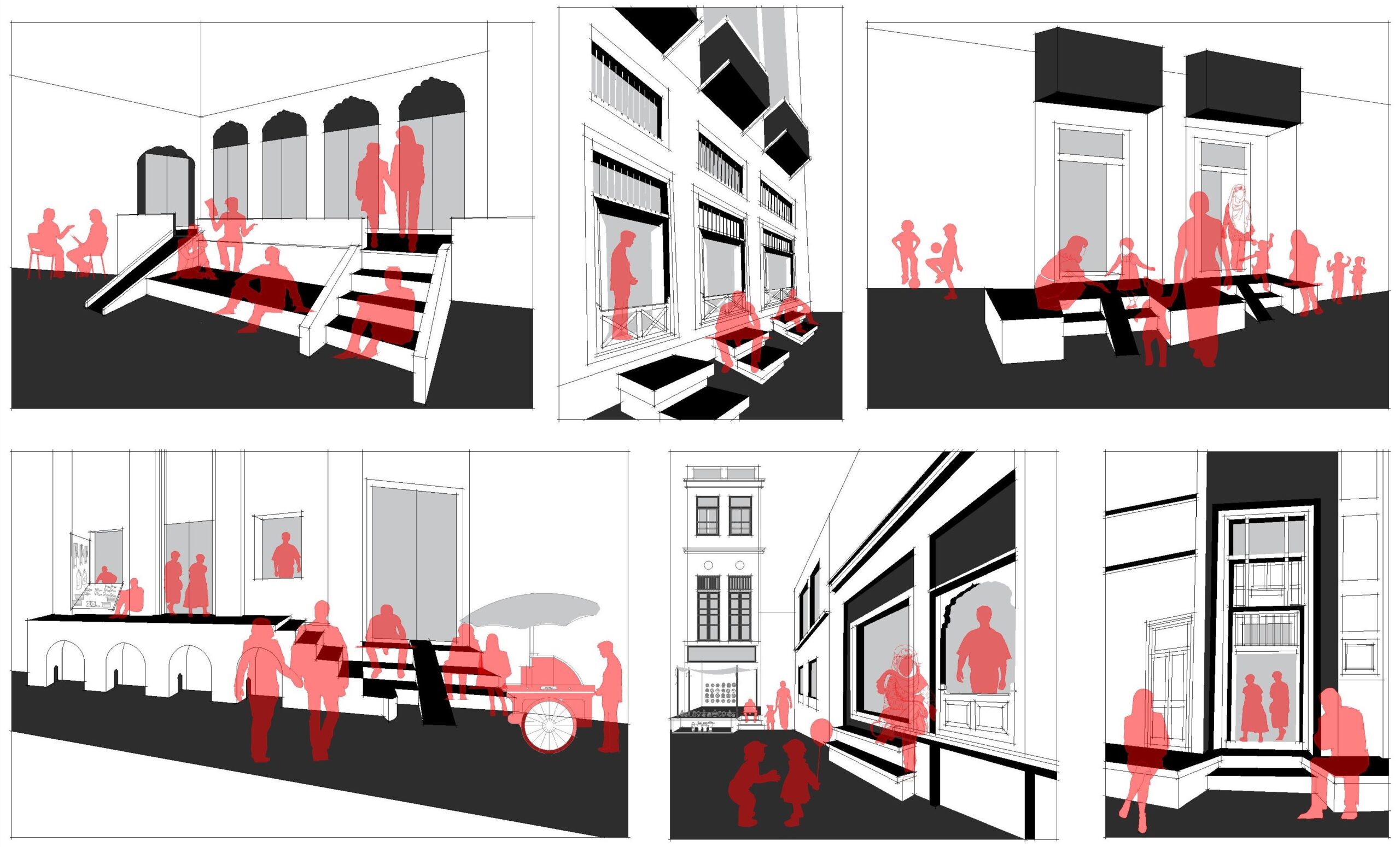
Drawing on critical spatial theory, design research, and ethnographic sensibilities, USP develops conceptual and methodological frameworks that address questions of inclusion, difference, and spatial justice. Special emphasis is placed on thresholds and conditions of in-betweenness—where boundaries become active sites of encounter, negotiation, and transformation. Through the lens of Threshold Urbanism, the forum rethinks edges not as divisions, but as generative spaces of possibility.
Across diverse geographic and cultural contexts, USP contributes to contemporary debates on urban transformation and sustainable futures by reimagining how spatial practices can produce more responsive, inclusive, and ethically grounded ways of inhabiting the world.
Themes
- Thresholds & Spatial Interfaces
Examining in-between spaces as critical zones of transition, interaction, and spatial complexity within urban environments. - Intercultural Urban Practices
Investigating how cultural differences are negotiated, expressed, and transformed through everyday spatial practices. - Feminist Urbanism & Spatial Justice
Reframing urban spaces through feminist perspectives that emphasize inclusivity, care, and equity. - Intergenerational Urban Futures
Exploring how urban environments can support meaningful engagement across age groups, fostering shared experiences and collective belonging. - Participatory & Design-Led Methods
Developing innovative methodologies that integrate community engagement, co-design, and spatial experimentation.
Members
- Dr. Sarah Javed Shah (Assistant Professor, UET Lahore)
- —-
- —-
- —-
Projects
ITU – Intercultural Threshold Urbanism: Dialogical Reciprocity Across Latitudes
Explores how threshold spaces enable dialogical encounters and mutual learning across diverse cultural and geographic contexts.
Focuses on South–North comparative research; Intercultural exchange through spatial practices; Reciprocity as a methodological and ethical framework
THRESH-SUF – Threshold Urbanism: Feminist Re-Imagination of Intercultural Nodes for Sustainable Urban Futures
Reimagines intercultural nodes through feminist and participatory approaches to foster equitable and sustainable urban futures.
Focuses on Feminist spatial theory; Inclusive urban design; Sustainability through social practices
TU[for]III – Threshold Urbanism for Intercultural and Intergenerational Integration
Investigates how threshold spaces can facilitate meaningful interaction between cultures and generations in rapidly transforming urban environments.
Focuses on Aging populations and migration-driven diversity; Social cohesion and inclusivity; Shared spatial environments and their temporality